

About & Scheduling Lao Kemper, LMT, CMT
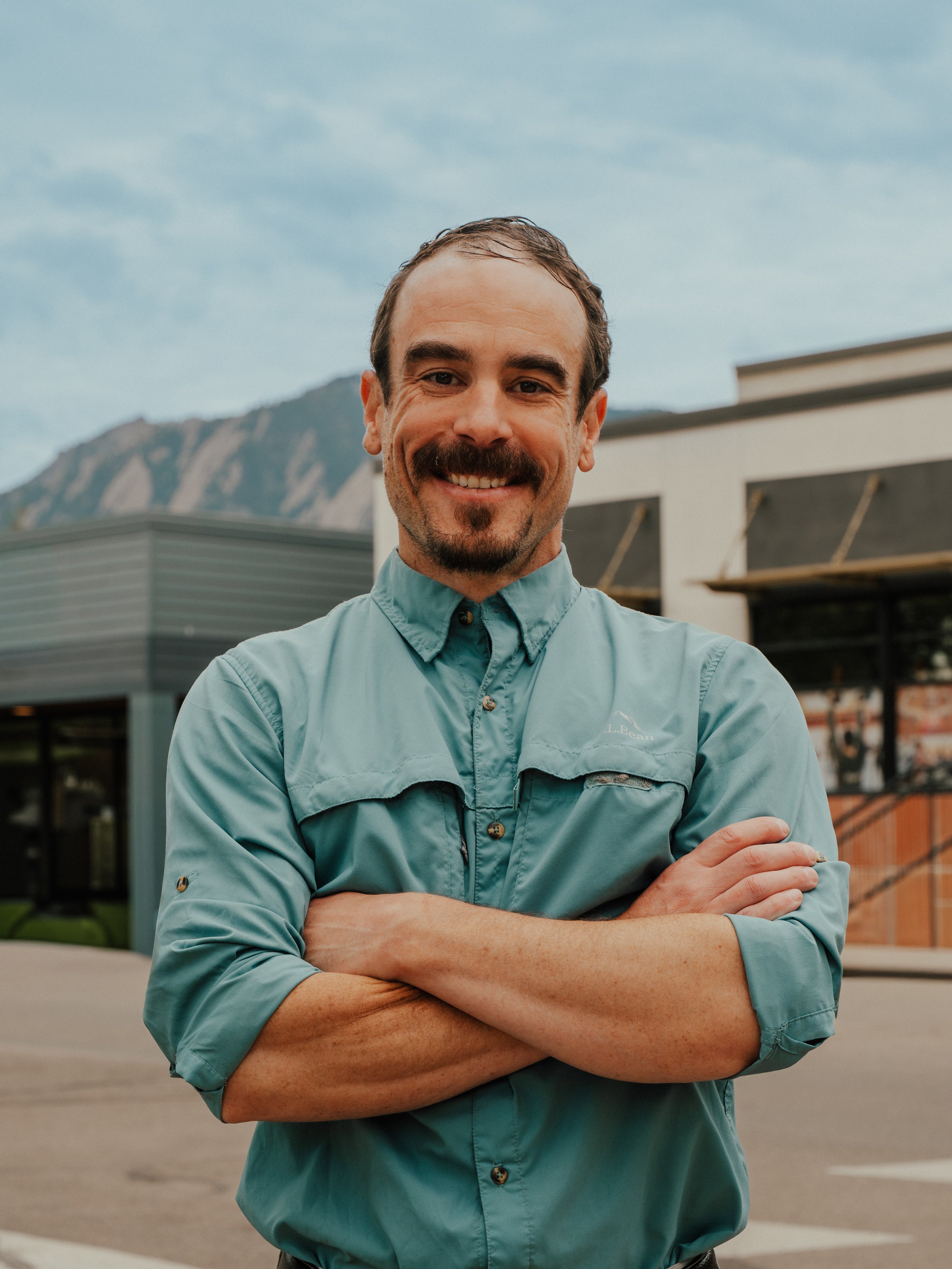
About Lao Kemper, LMT
I'm a clinical massage therapist in Boulder, Colorado, licensed since 2011. I work with people whose pain has a pattern behind it — desk workers, athletes, and anyone who has been told to stretch more and found it didn't help.
Most of my clients arrive after something else has already been tried. My job is to work out what is actually driving the symptom, treat that, and explain it clearly enough that you can manage it between visits.
Colorado license MT 0022979 · NPI 1457605495
Where I trained
I completed the 750-hour professional licensing program at Cortiva Institute in Seattle in 2010–2011, and the years that followed in the Pacific Northwest shaped how I work more than any single course did.
Seattle has an unusually deep bench of manual therapy educators, and I sought out the people whose work I most respected.
Teachers who have informed my style and approach
Brian Utting
Brian Utting, LMP, founder of the Brian Utting School of Massage, is one of the most respected soft-tissue educators in the country. I studied three of his courses — the head and neck, the shoulder girdle, and thoracic myofascia — each covering anatomy, assessment, and treatment as one continuous skill rather than three separate ones.
That framing is still how I approach a session. Assessment isn't a preliminary step before the real work. It is the work.
Michael Hamm
Michael Hamm, LMP is an anatomy educator whose thinking on the nervous system and fascia reshaped how I understand what my hands are actually doing. I never sat in one of his classrooms, though. My education from him came a different way - countless hours on his table, and years of mentoring alongside it. Receiving that much bodywork from someone that skilled teaches you what precise work is supposed to feel like, and you carry that reference into your own hands.
In 2015 we co-taught a daylong workshop in Seattle — Tai Chi and the Neurofascia — covering principles of movement, their health effects, and the mechanics most relevant to bodyworkers. Teaching alongside him remains one of the more useful things I've done for my own clinical thinking. Explaining something to other practitioners exposes very quickly where your understanding is thin.
Pat O'Rourke
Pat O'Rourke, LMP taught me region by region — the head and neck, the pelvis and hip, and the knee, twenty-four hours across the three. Regional depth of that kind is where the difference between general massage and clinical work actually lives. You cannot treat a knee well without understanding what the hip is asking it to do. Her own grounding is in cadaver anatomy, which she taught for many years, and it shows in the specificity of someone who has seen the structures rather than only read about them.
Mary Atkinson — intraoral work
I completed intraoral endorsement training with Mary Atkinson, LMP — a two-day intensive on the anatomy and treatment of the structures around and inside the jaw, for TMJ dysfunction, lockjaw, trigger points, and structural balancing.
This is worth explaining, because most people have never heard of it. The muscles that move your jaw — the masseter, temporalis, and pterygoids — are only partly accessible from outside the face. Working intraorally, with gloves, reaches muscles that external work simply cannot.
Very few therapists in Boulder offer it. If you have been told your jaw pain is something you'll have to live with, this is often the piece nobody addressed.
Continuing education
Licensing is a floor, not a ceiling. Training I've pursued since includes:
Abdominal massage — a five-module, 40-hour series with Marty Ryan, LMP, CVMT, covering the fascial architecture of the abdomen and the visceral structures within it
Myofascial meridians with Tom Myers
Palpation as a clinical assessment tool with Joe Muscolino
Functional Range Release fascial treatment with Andreo Spina
Advanced deep tissue technique with Ben Benjamin, PhD
Advanced trigger point technique with Simeon Niel-Asher
Plus coursework in functional movement, session sequencing, and treating rotational athletes
I also completed two semesters of Master's-level coursework at Southwest Acupuncture College in Boulder before the pandemic interrupted it — not to practise acupuncture, but because understanding another tradition's model of the body sharpens your own.
How I work
Every session starts with a short intake. How long has this been going on. What does your week actually look like. What makes it better or worse. Is it one-sided.
That conversation isn't a formality — it shapes everything that follows.
Treatment then targets the structures actually generating the symptom, which is frequently not where the pain is. Neck pain often traces to thoracic position. Lateral knee pain usually starts at the hip. Hand symptoms can begin at the forearm, sometimes at the neck.
You'll leave understanding the mechanism, not just feeling temporarily looser — because the mechanism is what you have to manage between visits.
Most people notice a change within one session. Patterns that took years to build generally respond better to a short course than a single visit.
Outside the treatment room
I've practised tai chi since 2011 and taught it in the United States and China. In 2013 I trained full-time on sponsorship at the Daqingshan Tai Chi Academy and competed internationally.
That practice informs everything about how I work — how I use my own body during a session, how I think about balance and load, and why I talk about ease rather than posture. Decades of watching how bodies move under tension teaches you things a textbook cannot.
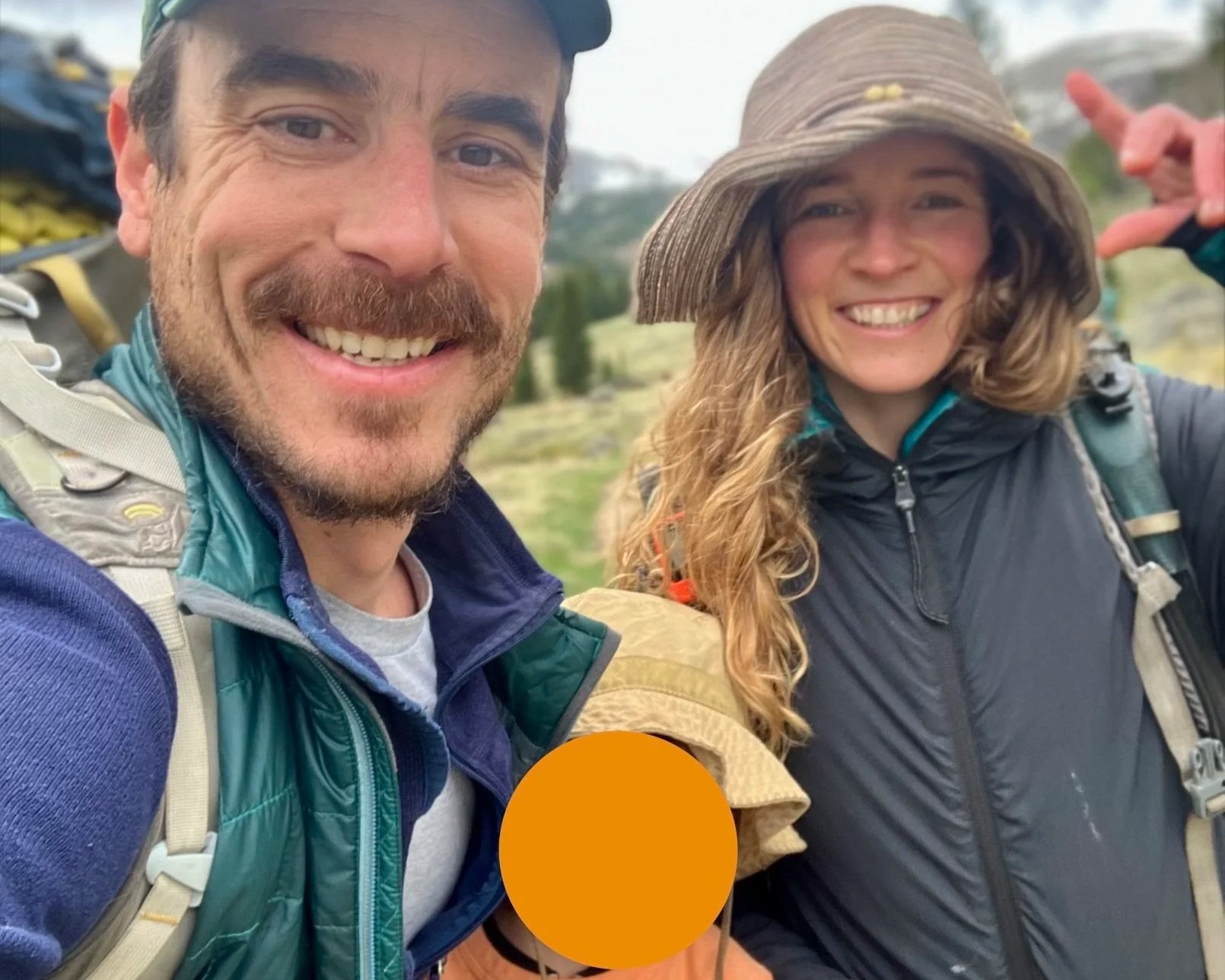
I live in Boulder with my wife, son, and dog. Outside of work you'll find us in the mountains, or me on a golf course.
Se habla español
I'm fluent in Spanish and see clients in either language. If Spanish is more comfortable for you, just say so when you book.
Practical details
Inside CrossFit Sanitas, 2525 Arapahoe Ave, Unit E-60, Boulder, CO 80302
Monday–Friday, 10am–6:30pm · online booking 24/7
Text (720) 514-9935 — text is preferred and usually fastest
25-minute focused, 55-minute clinical, and 85-minute extended sessions
Sliding scale available if cost is a barrier — please ask before booking
→ Read 21 five-star Google reviews → See session rates → Conditions I work with → Clinical Massage Therapy in Boulder
-
Clinical Bodywork, Injury Treatment Mentoring, Tai Chi Instruction
55 Minutes, Custom-Tailored Massage & Bodywork $140.00
Each appointment length with Boulder Pain Relief will target your primary acute or chronic issue(s). When speaking with Lao at the beginning of the session, please indicate which areas of your body you are needing help with and describe what are your symptoms.
This will help him to most effectively identify then address both local and systemic soft tissue patterns, reduce your pain, educate you about the involved anatomy (for those interested in learning), and help your body recover for what is next up for you!
85 Minutes, Custom-Tailored Massage and Bodywork $200.00
Injury Treatment Mentoring & Tai Chi Instruction $100/hour session
Lao offers one-on-one and small-group mentoring for individuals seeking a deeper understanding of how the body moves, heals, and adapts. Many people are never taught how to move in ways that prevent injury or reduce long-term strain. This work provides practical tools to build awareness, resilience, and healthier movement patterns.
Having benefited from mentorship throughout his life, Lao is committed to supporting motivated individuals and professionals through thoughtful, experience-based guidance.
For Massage Therapists & Bodyworkers
Massage therapists and bodyworkers seeking to advance their treatment skills can work with Lao to deepen their understanding of regional anatomy—including the jaw, neck, shoulder girdle, and related structures—and develop practical, clinically applicable techniques. Sessions focus on improving assessment, palpation, and treatment strategies to more effectively address the symptoms clients and patients present with in practice.
Tai Chi Instruction
Lao brings over 14 years of dedicated Tai Chi (Taijiquan) training, competition, and teaching experience in the United States, Canada, and China. His background includes intensive daily training in the mountains of China and participation in international Chen-style forms and push-hands competitions.
Instruction is offered to serious students interested in exploring Tai Chi as a system for movement meditation, restoring balance and health, and understanding the deeper power and structure within its martial applications. Teaching is adapted to the student’s goals, experience level, and physical needs.
-
Getting started is simple. Reach out through our contact form or schedule a call—we’ll walk you through the next steps and answer any questions along the way.
-
A Clinical, Anatomy-Driven Approach
Boulder Pain Relief Massage is built around a deep, working understanding of human anatomy and soft-tissue function. Every session is guided by precise palpation, anatomical knowledge, and how your body actually moves and adapts. Treatment focuses on identifying the root causes of pain, not just providing temporary relief.
Results Over Routine
This is not spa massage or a standardized routine. Each session is intentionally structured based on your pain patterns, injury history, and response to treatment. Clients often note that sessions feel targeted, thoughtful, and effective, with clear improvements in pain, mobility, and function.
Trusted by Medical & Allied Health Professionals
Lao’s manual therapy work is trusted by doctors, physical therapists, chiropractors, dentists, and mental health providers, many of whom refer patients seeking focused, conservative care for musculoskeletal pain and injury recovery. This level of professional referral reflects both clinical skill and a safety-first approach.
Skilled Palpation & Precision Treatment
Years of refining palpation allow Lao to assess tissue quality, restriction, and compensation patterns that are often missed. Treatment is precise rather than forceful, emphasizing effectiveness, client comfort, and long-term improvement.
Education & Client Understanding
Clients are encouraged to better understand their own bodies. Clear communication and education are part of the process, helping people move with greater confidence, reduce recurring pain, and make informed choices about their health.
Grounded in Movement & Longevity
Lao’s daily Tai Chi practice and movement training inform a holistic view of recovery, balance, and long-term physical health. Care is designed not only to relieve pain, but to support sustainable movement and resilience over time.
-
Focused, Thoughtful, and Personalized
Clients often describe their experience as focused and intentional. Sessions are not rushed or routine-based. Time is spent listening, assessing, and adapting treatment to how your body responds, so care feels personalized rather than generic.
Clear Communication and Trust
Working together is collaborative. Clients frequently note that they feel heard, safe, and respected throughout their sessions. Clear communication about pressure, comfort, and goals helps build trust and allows treatment to progress effectively.
Targeted Work with Real Outcomes
Rather than broad or superficial work, sessions emphasize precise, anatomy-informed treatment. Many clients report noticing measurable changes—such as reduced pain, improved range of motion, or better movement—sometimes within a single session and often building over time.
Calm, Professional Environment
The treatment space is quiet, professional, and grounded. Clients often mention that sessions feel calming without being passive, allowing them to relax while still receiving effective therapeutic work.
Care That Evolves Over Time
Treatment is adjusted session by session. As pain patterns change or improve, the work evolves accordingly. Clients appreciate that care feels responsive, thoughtful, and aligned with long-term relief rather than temporary fixes.
-
Jaw Dsyfuntion: TMJ/TMJD, Clicking, Bruxism/Grinding, Mandible Deviation, post-operative pain relief
Shoulder: Frozen shoulder, Thoracic outlet syndrome (TOS), pain, audible or felt clicking, limited range of motion, repetitive sports patterns (golf, tennis, pickleball, baseball, football).
Upper Extremity/Arm: nerve compression/impingement patters, carpal tunnel syndrome, tennis elbow, golfers elbow.
Hip: limited range of motion, acute and chronic pain, noise in the joint, pre and post operative hip replacement care
Back: acute and chronic pain, posture related discomfort, frequent meetings or traveling pain, limited movement patterns
Pelvis: pattern improvement with the sacroiliac joint, pain and imbalances
Knee and lower extremity: pre and post operative care for knee replacement, limited range of motion, acute and chonic pain, ITB syndrome, ITB pain, plantar fasciitis, ankle mobility, ankle sprains.
Frequently Asked Questions
Contact us
Interested in working together? Fill out some info and we will be in touch shortly. We can’t wait to hear from you!